
Limping of a Cane Corso is unusual and this can be a reason for concern. It can come on suddenly or gradually as a Cane Corso slowly develops difficulty in walking.
So what causes Cane Corso limping?
Let’s dive into the common causes of Cane Corso limping and when to seek help.
Table of Contents
Why is my Cane Corso limping?
Cane Corso limping can be caused by injury, joint problems, bone disease, and neurological disorders that affect their joints, bones, muscle, paws, or other tissue. This leads to a Cane Corso developing an abnormal gait and limping.
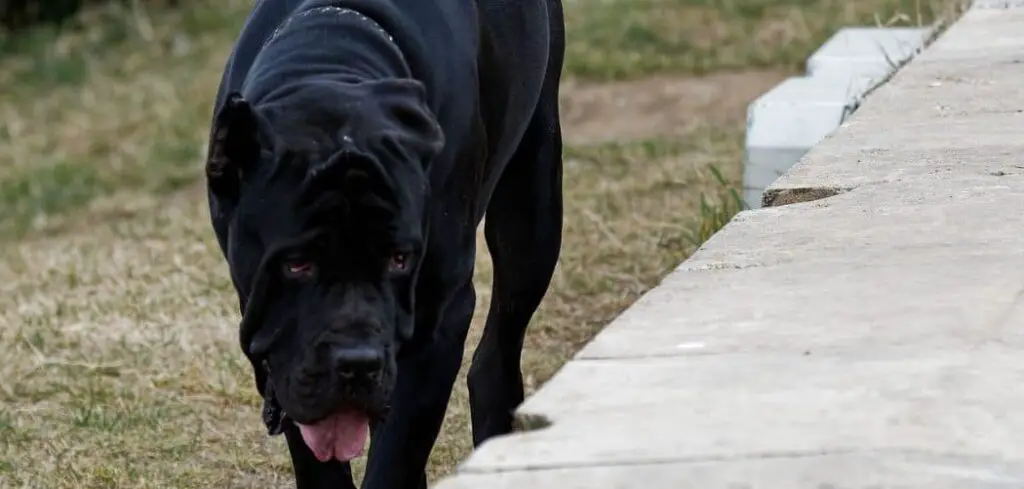
Cane Corso Limping With No Pain
A Cane Corso may limp without showing obvious pain because dogs often hide discomfort well, especially large, strong breeds.
Mild muscle strain, joint irritation, minor injuries, or early orthopedic problems can cause limping even when the dog still seems active and comfortable.
Large breeds like the Cane Corso are also prone to developmental joint conditions that may begin subtly.
Even if the dog does not cry or react painfully, persistent limping should still be monitored carefully.
If the limp lasts more than a day or worsens with activity, veterinary evaluation is required to rule out joint or bone problems.
Possible Causes of Cane Corso Limping
Injury
A Cane Corso can become injured on their legs or body which can cause limping. Injury can be from stepping on something sharp such as nails, glass, sticks, or animal bites, stings, broken nails, bruising, frostbite, burns, torn ligaments, sprains, fractures, or broken bones.
This can result from having their leg(s) stuck in the fence, an attack from another dog, or car accidents.
Checking for these possible causes of injury can help to initially determine if they are the cause of the limping and your Cane Corso’s trouble walking.
Bone disease
As a large breed dog, Cane Corsos are very susceptible to bone diseases. Bone diseases affect the stability of the legs, making walking difficult and painful.
This includes Eosinophilic panosteitis which affects young Cane Corso’s legs, arthritis, and bone cancer. These lead to limping and difficulty in walking.
Joint disease
Joint disease or problems are also common in Cane Corsos. The conditions occur during development when the joints do not develop properly due to fast growth, or diet.
Cane Corso joint diseases include osteoarthritis, hip and elbow dysplasia, osteochondritis dissecans (OCD), and Lyme disease which causes swollen joints and lameness.
A Cane Corso with bone or joint disease will have difficulty in walking, standing, lying down, or climbing stairs because of their sore weak legs.
Neurological disorders
Neurological disorders limit the transmission of signals from a dog’s nerves to the brain for a particular function of the body. When this affects signals from the legs to the brain, limping occurs.
Canine Degenerative Myelopathy is a neurological condition common in dogs as well as Cane Corsos that causes a Cane Corso to have an abnormal walk.
Cane Corso Limping Back Leg
Back leg limping in a Cane Corso can result from hip dysplasia, ligament injury, muscle strain, arthritis, or paw injury.
Large breeds place significant stress on their hips and knees, making orthopedic problems more common as they grow or age. Some dogs may limp only after exercise, while others struggle standing up or climbing stairs.
If the dog avoids putting weight on the leg, shows stiffness, or the limp continues for several days, veterinary assessment is important. Early treatment may help prevent worsening joint damage.
Read more: Cane Corso limping back leg: The causes and how to help
Cane Corso Limping Front Leg
Front leg limping in a Cane Corso may be caused by shoulder strain, elbow dysplasia, paw injury, arthritis, or growth-related bone conditions.
Large breed dogs can develop elbow and shoulder problems during growth, especially if they exercise heavily while still developing.
The limp may appear mild at first, but gradually worsens over time. Swelling, reluctance to walk, or pain when the leg is touched should be evaluated immediately by a veterinarian.
Read more: Cane Corso limping front leg: Reasons why and what to do
Cane Corso Puppy Limping
A limping Cane Corso puppy should always be monitored closely because giant breed puppies are vulnerable to growth-related orthopedic issues.
Limping may result from rough play, muscle strain, joint instability, growth plate injury, or developmental bone disease.
Puppies grow rapidly, and excess stress on developing joints can lead to long-term problems if ignored.
Even mild limping that persists beyond a day or two should be checked by a veterinarian.
Cane Corso Puppy Limping Front Leg
Front leg limping in a Cane Corso puppy may indicate elbow dysplasia, panosteitis, sprains, or growth plate injury.
Large breed puppies sometimes develop temporary shifting leg pain during rapid growth phases, but injuries can also occur from jumping or rough activity.
Because growing bones are still developing, persistent limping requires veterinary evaluation to prevent permanent joint damage or abnormal growth.
Cane Corso Puppy Limping Back Leg
Back leg limping in a Cane Corso puppy may stem from hip dysplasia, muscle strain, knee injury, or developmental orthopedic disease. Cane Corso puppies are especially prone to hip and joint problems as their bodies grow quickly.
If the puppy struggles to stand, bunny hops while running, or avoids activity, veterinary attention is important. Early diagnosis can improve long-term joint health and mobility.
When To Seek Help
Cane Corso limping can be moderate or severe. It is not unusual not to know when to seek help when you start noticing the symptom. However, seek help when your Cane Corso:
- Is injured
- Limping continues for more than 1- 2 days
- Has signs of broken bones or dangling limbs Swelling of the limbs
- Seems in pain
- Health is deteriorating with other symptoms of illness (loss of appetite or lethargy)
The veterinarian will conduct a full examination to determine the underlying cause of the limping.
Limping due to injury may be determined quickly if it is due to injury of the paws by sharp objects or due to a sprain, cut, frostbite, or burn.
Other underlying causes require more tests to determine the problem. Tests that are conducted include x-rays, a biopsy for detection of cancer, or blood tests for determination of infection causing Lyme disease.
Cane Corso Limping: Treatment
Treatment depends on the cause and severity of the limping. The veterinarian may perform a physical exam, X-rays, or joint evaluation to identify injuries or orthopedic disease.
Mild strains may improve with rest, limited activity, and anti-inflammatory medication.
More serious conditions such as hip dysplasia, ligament injuries, or joint disease may require long-term management, physical therapy, weight control, or surgery.
Early treatment is especially important in large breeds like the Cane Corso because untreated joint problems can worsen significantly over time.
Key Takeaway
Limping is a sign that something may be wrong with your Cane Corso. It could be due to injury or a serious underlying health problem.
If your Cane Corso is limping due to injury or underlying health condition, medical care is required.
With the right treatment and care, Cane Corso limping can be managed. Therefore consult your veterinarian when you notice signs of limping.


